

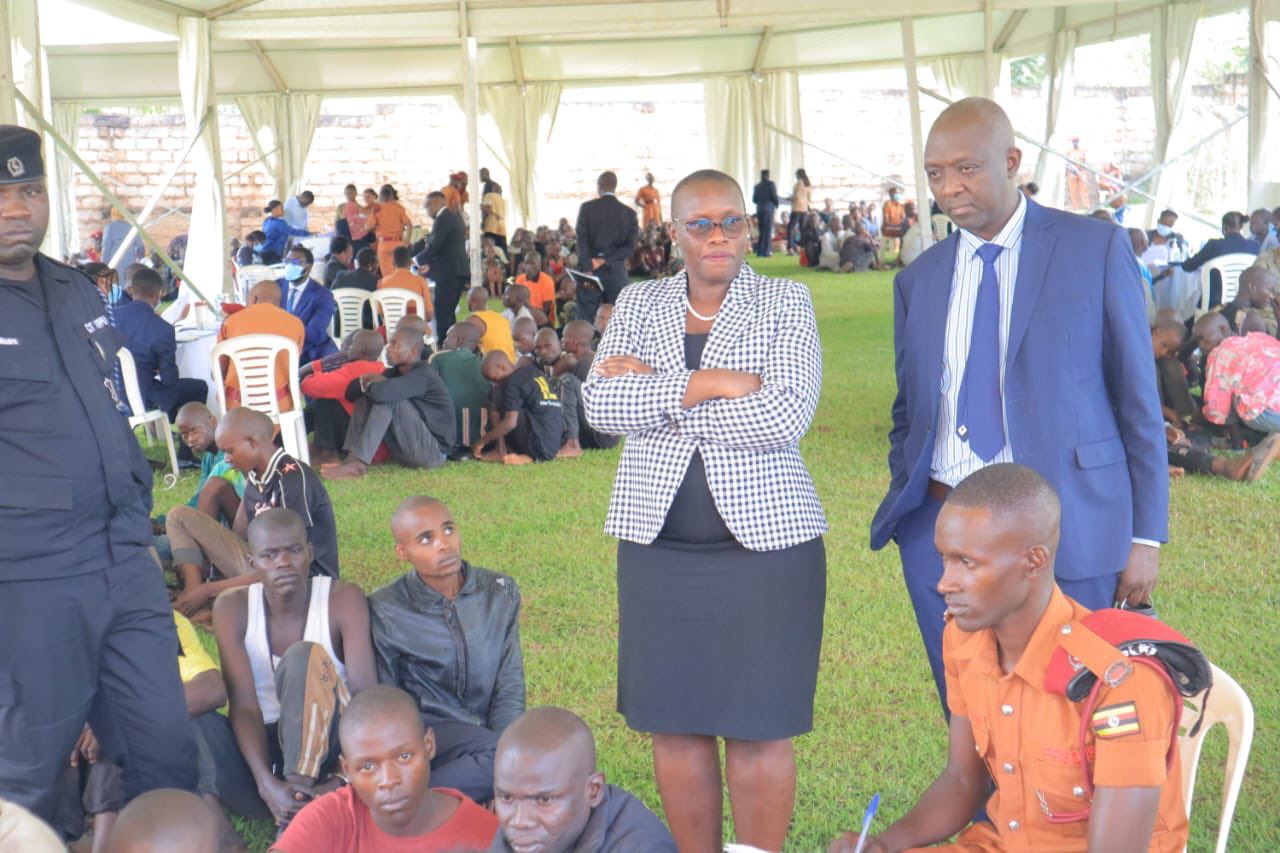
Daily Non-Capital Plea Bargain Hearings for the Kampala Metropolitan Area are underway at the Judicial Training Institute (JTI), as the Judiciary intensifies efforts to decongest prisons and speed up the resolution of criminal cases through alternative dispute resolution mechanisms.
The hearings follow a virtual refresher training conducted by the Judicial Training Institute on May 30, 2026, under the theme, "Justice that Listens, Serves and Resolves."
The training brought together judicial officers, prosecutors, defence lawyers, investigators, prison officers and community service officials involved in implementing plea bargaining within Uganda's criminal justice system.
Addressing participants, Plea Bargain Focal Judge Lady Justice Jane Okuo Kajuga called for greater consistency in the application of plea bargaining procedures, citing concerns raised by appellate courts over variations in practice across different jurisdictions.
"Several appellate court decisions have highlighted concerns regarding the uniform application of plea bargaining procedures," Justice Kajuga said.
She stressed that victim participation remains a fundamental component of the process and urged prosecutors to ensure victims' views are adequately reflected during negotiations and sentencing recommendations.
Justice Kajuga also called for strict adherence to documentation requirements under the Plea Bargaining Rules and encouraged greater use of Community Service Orders in appropriate cases.
She urged participants to use the refresher training to address practical and legal challenges encountered during previous plea bargain sessions.
The Executive Director of the Judicial Training Institute, Justice Prof. Andrew Khaukha, described plea bargaining as an important settlement mechanism within criminal justice, comparable to mediation and settlement initiatives commonly used in civil proceedings.
"There is a need for consistency and uniformity in case handling," Khaukha said.
The training was moderated by Lillian Bucyana, Deputy Registrar in charge of JTI, who said it was intended to prepare stakeholders for the second phase of the Kampala Metropolitan Non-Capital Plea Bargain Hearings following the successful first phase launched by the Principal Judge in April.
According to Bucyana, the first phase significantly contributed to reducing inmate numbers at Kampala Remand Prison by facilitating quicker disposal of cases that might otherwise have remained in the court system for extended periods.
She expressed optimism that the latest hearings would further improve case management and strengthen cooperation among criminal justice institutions.
Participants received practical guidance on various aspects of the plea bargaining process from judicial officers, prosecutors and legal practitioners.
Justice Okuo Kajuga shared lessons on avoiding common pitfalls in plea bargaining, while Registrar of the Alternative Dispute Resolution Registry Justine Atukwasa guided participants on preparations for plea bargain camps, readiness assessments and stakeholder expectations.
Chief Magistrate Esther Rebecca Nasambu provided an overview of the Plea Bargaining Rules, while advocate Susan Wakabala, a member of the Plea Bargain Caravan, discussed the role of defence counsel in ensuring fair outcomes for accused persons.
Assistant Director of Public Prosecutions Margaret Nakigudde and Senior State Attorney Lillian Nandawula led discussions on the role of prosecutors in the negotiation process, while Principal Information Management Officer Joseph Ssinabulya trained participants on real-time data capture and monitoring to improve case tracking.
Earlier on Monday, Daniel Bwambale, Senior Principal Magistrate in charge of Alternative Dispute Resolution, briefed participants on logistical arrangements and preparedness ahead of the hearings.
Plea bargaining was formally introduced into Uganda's criminal justice system as part of wider judicial reforms aimed at reducing case backlogs and shortening the time suspects spend on remand awaiting trial.
Under the process, an accused person voluntarily admits guilt in exchange for an agreed recommendation on sentence or charges, subject to court approval.
The programme has increasingly been used by the Judiciary to address overcrowding in prisons and improve efficiency in criminal case disposal, particularly for non-capital offences.
Uganda's prisons have long faced challenges related to congestion, with a significant proportion of inmates comprising remand prisoners awaiting the conclusion of court proceedings.
Judicial officials say continued training and coordination among justice sector institutions are critical to ensuring plea bargaining remains fair, transparent and effective in delivering timely justice.
